Apr 23, 2021
6 min read
Critical thinking as a Design tool
Inspired by the book “How to Think more Effectively — A guide to greater productivity, insight, and creativity”, I started to think about my own way of processing and analyzing information in life as well as in my design process.

Inspired by the book “How to Think More Effectively — A Guide to Greater Productivity, insight, and creativity”, I started to think about my own way of processing and analyzing information in life as well as in my design process. In fact, I’ve never stopped to think about my own thinking process before I came across this book (weird, isn’t it?). I didn’t believe that ideas came to me by luck, but what I didn’t think about before is that I could still optimise my thinking process, reframing it as I needed to.
One of the chapters that particularly caught my attention talked about Sceptical thinking, where I found this interesting piece: Part of thinking effectively is knowing, at one level, the likelihood that we might not be thinking well and so proceeding with humility and an appreciation of our mind’s characteristic tricks. — “How to Think More Effectively (p. 133). This made me read more about different types of thinking and how that could help me find a way to improve my design thinking process. By improving our thinking skills, we can work on having better ideas, solve problems more effectively, make better decisions, structure information better, and ultimately, build our own system of values and beliefs. In short, that means adapting our mental models.
👉 Read more about mental models applied to user experience design. — https://www.nngroup.com/articles/mental-models/
Everything we design, every decision we make, is impacted by our experiences that, over time, have shaped the way we look at the world. When diving into the types of thinkin,g I immediately linked my need for improvement with critical thinking .Critical Thinking consists of mental processes of discernment, analysis, and evaluation. It includes possible processes of reflecting upon a tangible or intangible item in order to form a solid judgment that reconciles scientific evidence with common sense. — Psychology Wiki
Critical thinking applied to design.
A good start for applying critical thinking is by asking for clarification about a given subject. The goal within this process is to clarify and to gain details of the situation. This way, we are allowed to reflect and re-evaluate a scenario. Approaching a new design project, making use of this will let us open our eyes to issues we are not familiar with and even be aware of decisions that were made before by understanding the context in which they were made. Another important point is to remind ourselves to be skeptical of our own thinking. As an example, we usually tend to prioritize or to think that some solution might be the best one because we’ve heard about it frequently from users or even within our team. That’s an example of the availability bias — a mental shortcut that involves relying on information that comes to mind quickly, so when we need to make a decision this allows us to conclude faster. At this point thinking critically will let us zoom out a certain scenario, where we should not be seeking information following our assumptions but looking for the opposite perspectives.
The Power of Good Questions
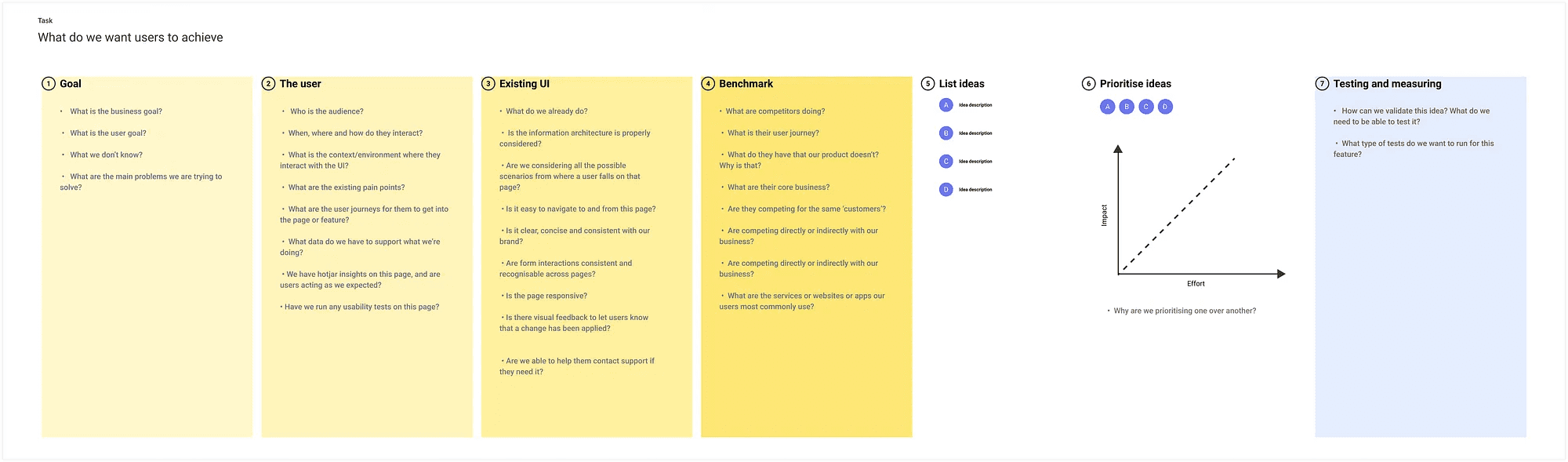
As we do this work of clarifying the insights we have, and before starting ‘pushing pixels’, we can create a complete board where we can come back any time and reframe the problem and the solutions. As we gather more and more insights about what the user needs to do, what is the business goal is, and how others handle the same problem, we can make sure that we are approaching the problem in the right way. Usually, this template is filled with answers, but for this purpose, I’ve filled it with useful questions we usually ask to find the right answers.
Press enter or click to view ithe mage in full size
Product Design Process at Trouva
Advantages of applying critical thinking to Design
Below, you can find a few examples of how we can apply it to the design process and how crucial it is to have these skills to get the best out of the information we get at all stages of the design process
1. Design Thinking
The design thinking ideology asserts that a hands-on, user-centric approach to problem solving can lead to innovation, and innovation can lead to differentiation and a competitive advantage. — NNGroup
Design Thinking considers different steps within completely undefined parameters. Those parameters can constantly change as we discover new things. It is a problem-solving way of looking at things. Design thinking is an iterative process, meaning you go back and forth to look for a solution to a problem that should be better than existing ones. Critical thinking is an important component that comes into play at every stage of the design thinking process.
2. Creative Problem Solving
As designers, we’re often solving problems. Critical thinking is the key to helping us think from different angles and points of view, as well as a good skill to use to detect problems earlier in the process. By forcing ourselves to use different perspectives, we can think of solutions for each one of them. This way, we unblock our creativity before judging any of the solutions we came up with.
3. Research / Observation
When asking for users’ feedback, it’s important to be aware that biases will influence the way people provide feedback to u,s and our own biases will influence the way we receive and interpret their feedback. At this point, Critical thinking will let us focus on the whys and hows more than our previous assumptions. This plays an important role when starting with research or when preparing an interview script.“We will have learnt to be good sceptics, and better thinkers, when we always maintain a position of doubt”. — “How to Think more Effectively (p. 135).”
Making unbiased questions allows us to make sense of ambiguity and uncertainty, letting us understand the implicit meanings of a given scenario. For this reason, critical thinking takes us into the future experience allowing us to be closer to the intended use conditions.4. Absence of biasbi·as: prejudice in favor of or against one thing, person, or group compared with another, usually in a way considered to be unfair; cause to feel or show inclination or prejudice for or against someone or something.
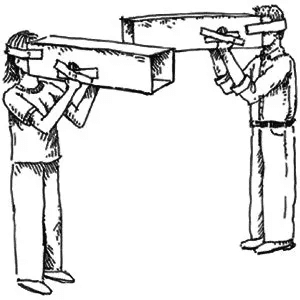
Author/Copyright holder: Unknown. Copyright terms and license: Unknown.
When tackling a design problem, we need to make sure we understand our audience, or if we don’t, to make a conscious decision to learn about them. Supporting our design decision based on existing data. Qualitative and quantitative evidence give us the empathy we need to do good work. As we seek broader perspectives ,we are also building a much more open mindset than we currently do. All it takes is our desire to stay open to overcome our limited and biased mindsets.
👉 Read more about unconscious bias in design
Critical thinking is an essential part of the design process
Critical thinking is essential to the design process. Critical thinking allows us to ask thoughtful questions so we can design later on. It provides us with a more rounded perspective on the solutions we provide by letting us see them more holistically. In doing so, we can consider more scenarios, more broadly, and make more informed design decisions. As designers, using critical thinking as a tool not only makes the task easier but also makes our vision clearer and less prone to biases. By examining the pros and cons of a set of solutions,s we can make sure we have the best solution at hand. A designer must be a critical thinker if they are to fulfill their potential, whether working alone or as part of a team.
— Remember the mantra: never fall in love with your hypothesis! 💪
Dizparada is a senior product designer looking forward to better understanding humans. She loves sports and getting lost in nature.
Originally published in Medium: https://medium.com/trouva-product-blog/critical-thinking-as-design-tool-fa1c789fa96e